Medical illustration
Why the Viewpoint Matters in Medical Illustration
In an anatomical illustration, the view determines which structures can be seen together and which relationships the reader can understand at a glance.
Choose the view around the question
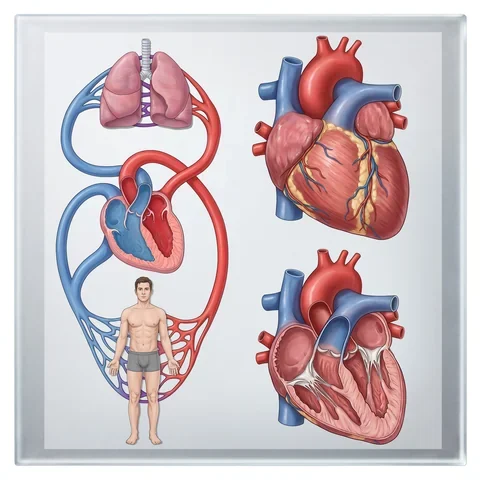
An exterior view of the heart can show where surface vessels run. A cutaway reveals the chambers and valves. When the question is how blood travels through the lungs and the body, an additional schematic can show that route without asking the viewer to infer it from a single anatomical view.
Use a consistent visual language
Distinguish structures with a combination of color, position, and labels where needed. A cutaway should make it clear what has been removed and what remains visible. If there are multiple panels, keep orientation and terminology consistent so the reader can move between views without having to relearn the figure.
Match the detail to the reader
A figure for a clinical publication can use specialist terminology and retain details relevant to the text. An image for patient education may focus on fewer structures and explain their relationship in plain language. In either case, the clinical team can review the draft for accuracy before the final illustration is prepared.